- Pictures
- Damage Patterns
- Biology
- Propagation
- Pest Control
- Biological Control
- Historicals
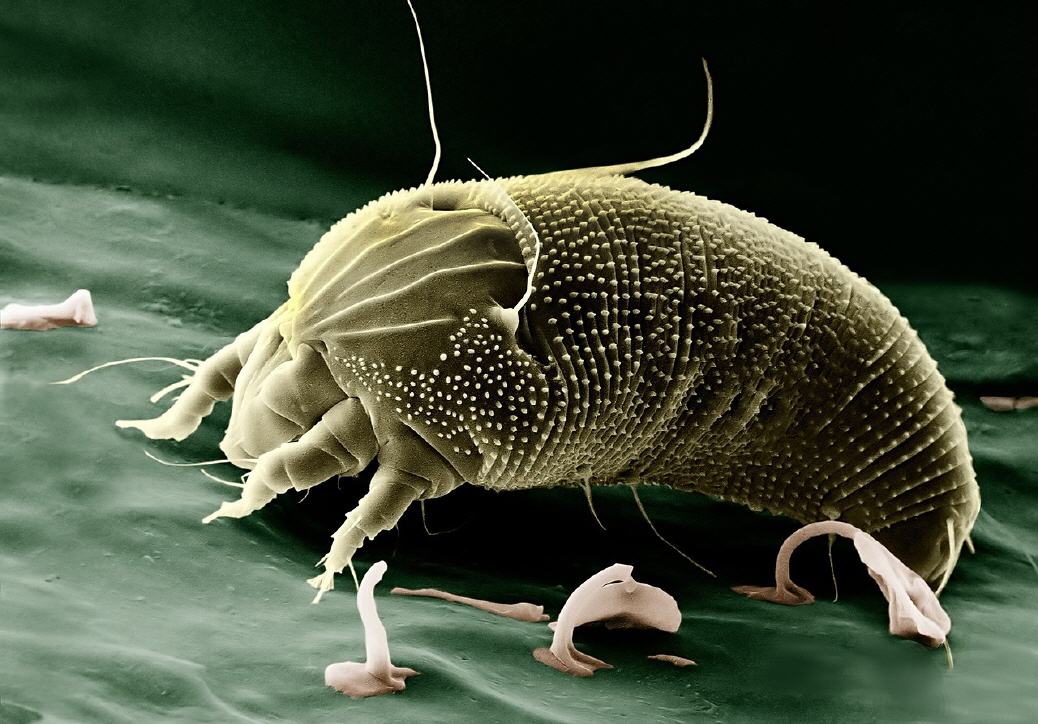
Free for use under the Pixabay Content License
Soft-skinned mites, also known as thread-footed mites, are very small, elliptical, glassy-translucent mites measuring approximately 0.2–0.3 mm in length. They live in very hidden places, usually near the growing point at the heart of the plant. The mites reproduce very quickly at high temperatures and high relative humidity. The animals are almost never found until the damage is visible. Mites are sensitive to light and prefer young, soft plant tissue.
Mites are found in the tropics and in greenhouses in temperate zones. In 1890, the first report of soft-skinned mites infesting cotton was published. Soft-skinned mites also cause economic damage to other crops in tropical regions, such as tea, rubber, citrus fruits, tobacco and potatoes. In greenhouses, peppers are frequently infested, but aubergines, tomatoes and cucumbers as well as ornamental plants such as begonias, ivy, pelargoniums, Saintpaulia, Impatiens New Guinea hybrids, gerberas, cyclamen and other crops are also susceptible. In temperate zones, the mites cannot overwinter outdoors.
Among orchids, Paphiopedilum and Phalaenopsis are particularly frequently attacked.
Soft-bodied mites reproduce sexually (males and females mate) and lay eggs, from which larvae develop and then grow into adult animals, undergoing several moults. Reproduction is greatly favoured by high humidity, and under ideal conditions, development from egg to adult can take only 4-5 days, with each female laying up to 50 eggs, resulting in enormous reproductive potential.
Pest Control
First, any high humidity must be reduced. Spray acaricides (active ingredient change) repeatedly and calmly, taking care to reach the hiding places of the soft-skinned mites as much as possible.
Biological control using Amblyseius predatory mites is possible. It is advisable to use a bag system so that the predatory mites gradually migrate from the bags into the plant population.
As soft-bodied mites only became known as pests in our crops in the mid-20th century, no historical documents are available.